WildSense project
AMBER – AI-assisted Monitoring of Biodiversity using Edge Processing and Remote Sensors
Building a global network of automated biodiversity monitoring systems
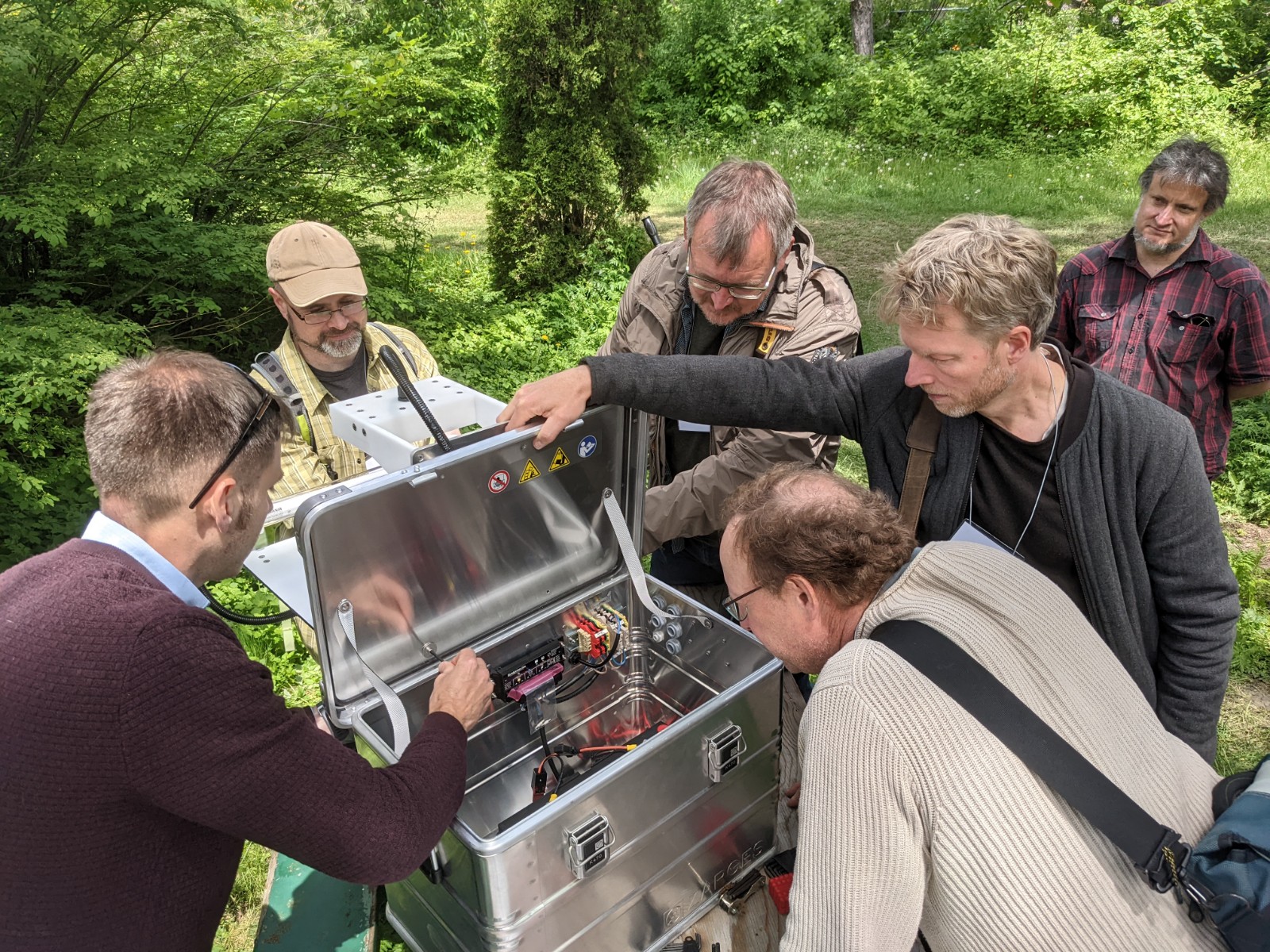
Overview
AMBER (AI-assisted Monitoring of Biodiversity using Edge Processing and Remote Sensors) was an international research initiative led by UKCEH in partnership with the Alan Turing Institute and supported by the abrdn Charitable Foundation.
The project explored how automated monitoring technologies — particularly AMI systems — can help address the global biodiversity crisis by generating scalable, standardised, and less biased data on wildlife communities.
Traditional biodiversity monitoring is often patchy, labour-intensive, and reliant on manual sampling. AMBER showed how edge-processing, remote telemetry, and AI can be used to collect and process data continuously across many sites, including some of the world’s most biodiversity-rich but data-poor regions.
Objectives
AMBER’s work was structured around nine core objectives:
- Deploy a network of around 40 AMI systems across four demonstration regions in the tropics and subtropics.
- Engage local partners to support citizen science and outreach, building awareness and capacity in biodiversity monitoring.
- Produce a global guide on automated biodiversity monitoring and how organisations can contribute.
- Train and support local coordinators responsible for maintaining equipment and data pipelines.
- Generate millions of primary biodiversity records, including images and acoustic data.
- Share occurrence records openly via platforms such as GBIF.
- Ensure AMI systems are remotely operable, requiring minimal local intervention.
- Establish standards for integrating automated monitoring data into conservation and research frameworks.
- Mobilise a community of volunteers and species experts to help label images and acoustic recordings.
Deployment and reach
AMI systems were deployed across multiple tropical and subtropical regions, including:
- Central America – e.g. Costa Rica, Panama
- South America – e.g. Argentina
- Africa – pilot deployments in Kenya, Uganda, and other sites
- Asia – e.g. Singapore, Japan
By operating in diverse, often challenging environments, AMBER refined both the hardware and the AI models, testing how automated monitoring can work reliably over long periods and at continental scales.
Working with partners
Participating organisations in AMBER benefited from:
- AMI systems, retained after the project.
- Funding for deployment and maintenance.
- Access to data streams and processed outputs, with datasets shared openly where possible.
- Training and technical support from UKCEH and the Alan Turing Institute.
- International recognition as part of a pioneering biodiversity monitoring network.
In return, partners contributed:
- Local capacity to deploy and maintain systems in the field.
- Expertise and engagement in citizen science and outreach activities.
- Species expert input to help validate and label datasets.
- Communication and dissemination to promote the project and its goals.
Innovation and legacy
AMBER was not only about testing new monitoring hardware: it helped define what future biodiversity data infrastructure could look like.
The project’s legacy includes:
- A distributed network of automated monitoring sites across multiple continents.
- Open biodiversity datasets that help fill major geographic and taxonomic gaps.
- Practical standards and workflows for integrating automated data streams into conservation and research programmes.
Ultimately, AMBER’s vision was to help move biodiversity monitoring from scattered, manual observations towards a more integrated, near real-time, global system — giving scientists, conservationists, and policymakers stronger evidence to act on biodiversity loss.
Updates